Biosensors
e-corder can record signals from many different types of biosensor with a suitable meter/preamplifier.
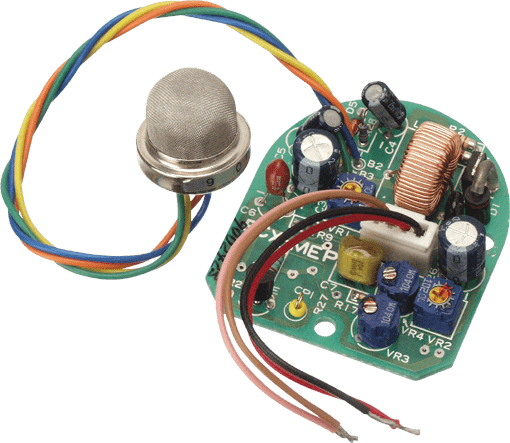
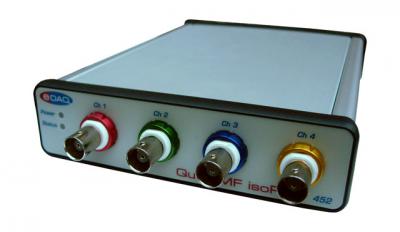
Usually these sensors are designed to work at a particular voltage (the polarising potential). The resulting current flow is measured and is affected by the concentration of substrate. The Clark-style dissolved oxygen electrode is an example of this type of sensor. However, biosensors usually incorporate a bioactive material (sometimes an enzyme-containing layer) that is used to catalyse a particular reaction that converts the analyte to a substrate that can be measured by the sensor.
You need to ensure that the amplifier you choose can provide the polarising voltage required, and that the input sensitivity will be appropriate for the current range that you expect your sensor to produce.
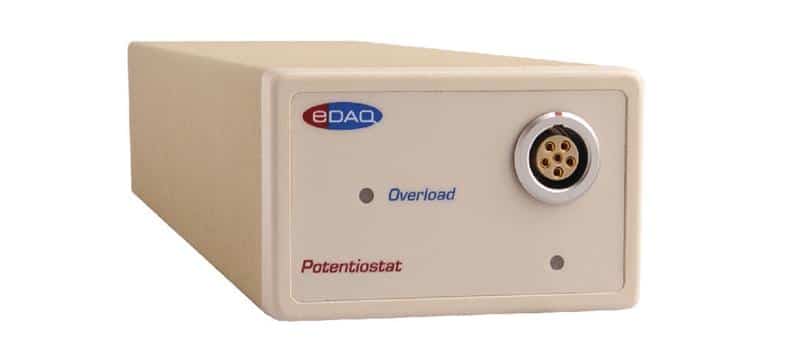
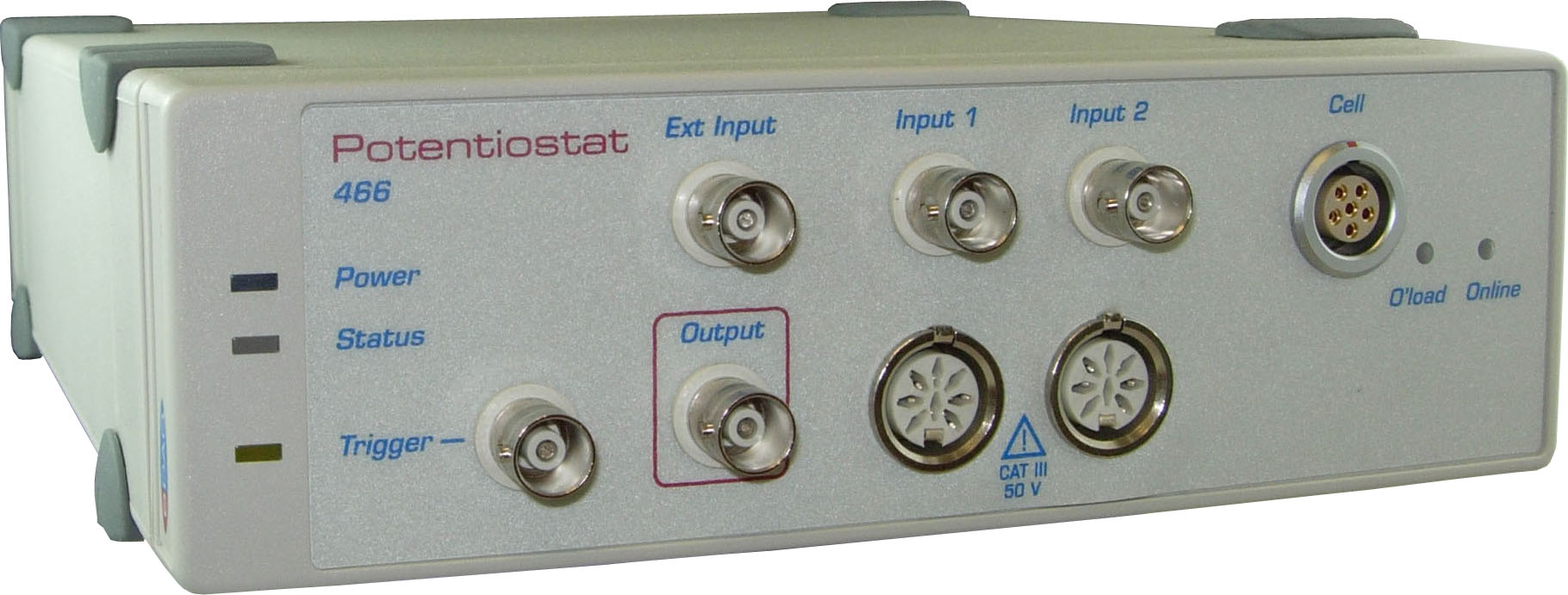
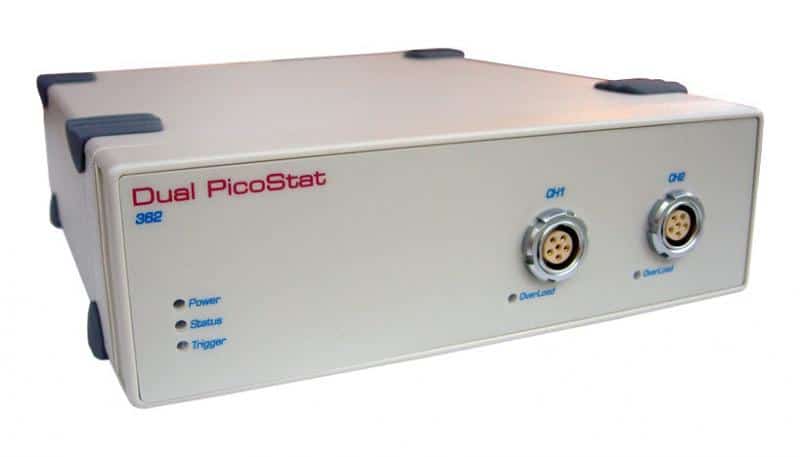
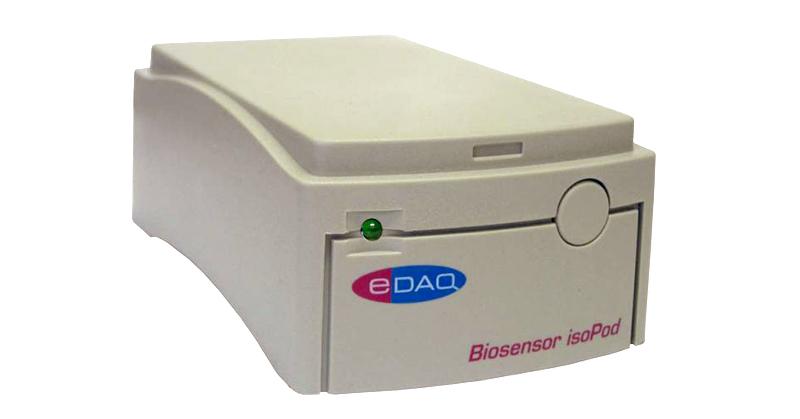
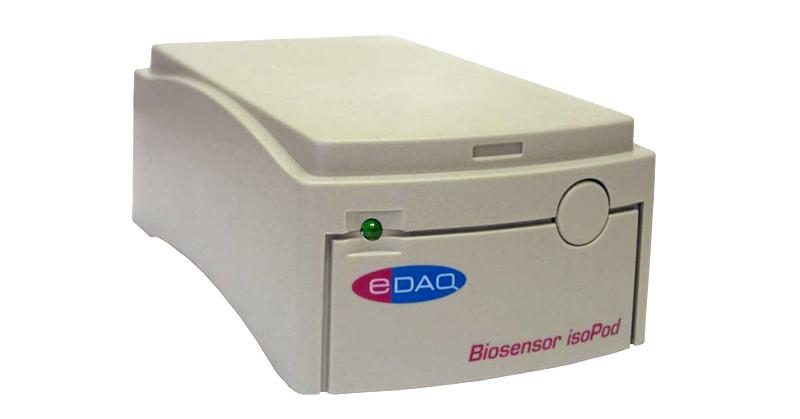
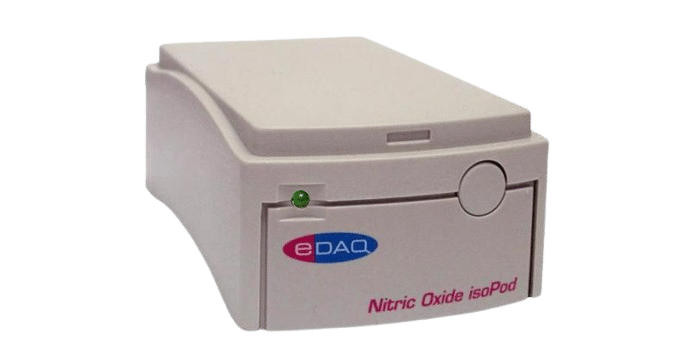
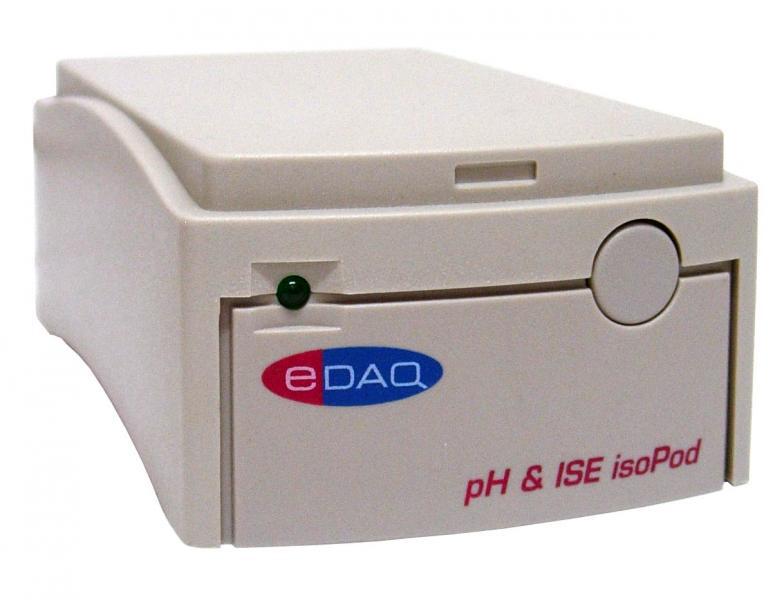
The eDAQ
can all be used with two electrode (working and counter electrode) systems.
If techniques such as cyclic voltammetry or differential pulse voltammetry are required then EChem software can be used with e-corder and the Potentiostat or Picostat.
For flow systems PowerChrom and e-corder with Chart software are compatible with many commercial electrochemical HPLC detectors.

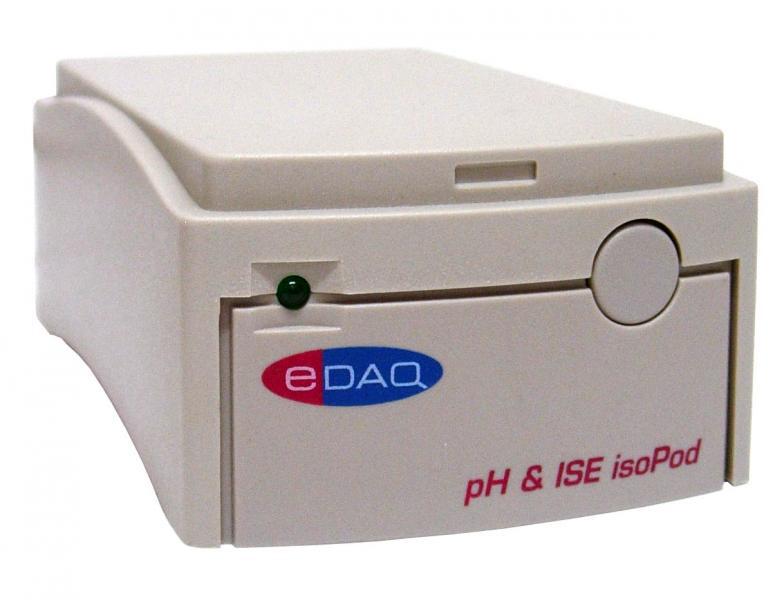
These sensors change potential (voltage) as the concentration of the substrate is varied. They often require the use of a separate reference electrode and can usually be monitored with the:
Most sensors produce potentials in the range ±1 V, while a few might require ±2 V so most pH meters would be suitable measuring devices. However, make sure they have provision for fitting a separate reference electrode if required, and that they provide a recorder signal that can be sent to the e-corder.

These sensors change resistance (impedance) as the concentration of the substrate is varied. They can often be monitored with the
The reciprocal of a conductivity signal is a resistance signal. You can also use a potentiostat as a detector (see Amperometric Sensors, above), and divide the current signal by the applied potential signal to get a resistance signal.
AC Impedance sensors usually employ an Electrochemical Impedance Spectrometer (EIS) as a detector. These devices measure the impedance over a range of AC frequencies. See the: Z100 Electrochemical Impedance Analyzer
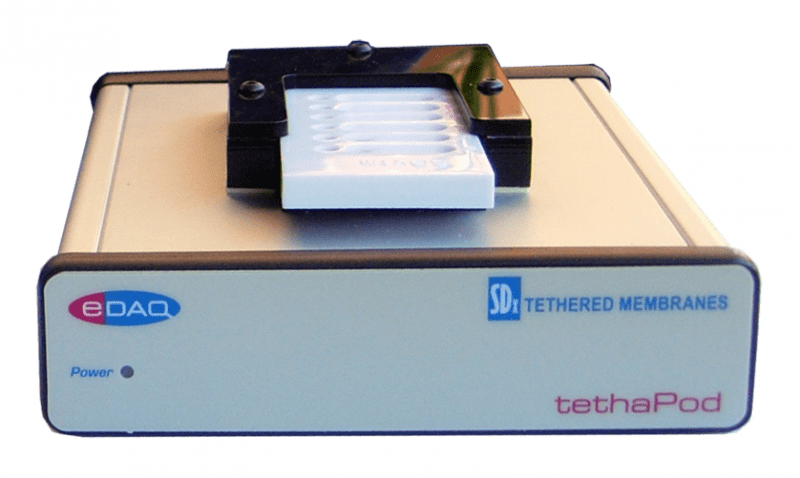
The tethaPod system is also an AC Impedance sensor used to determine the conductivity and capacitance of a tethered membrane preparation.

These usually comprise quartz crystal technology where the surface adsorbed species alter the frequency of vibration of the quartz crystal. The frequency change is measured with a ‘quartz crystal microbalance’, QCM, which often provides an analog signal suitable for monitoring with e-corder.
The QCM200 microbalance by Stanford Research Systems is a suitable unit.
The surface adsorption can be caused by an antibody/antigen interaction.
With Chart software the output signal from the QCM can be monitored along with the current and potential signals from a potentiostat in an electrochemical experiment. Please see this application note for details.
Other types of sensor are based on field effect transistors (FETs), light absorption or fluorescence signals, etc. These sensors may also be monitored with e-corder so long as the appropriate amplifier/meter provides an analog voltage (or “recorder”) signal.
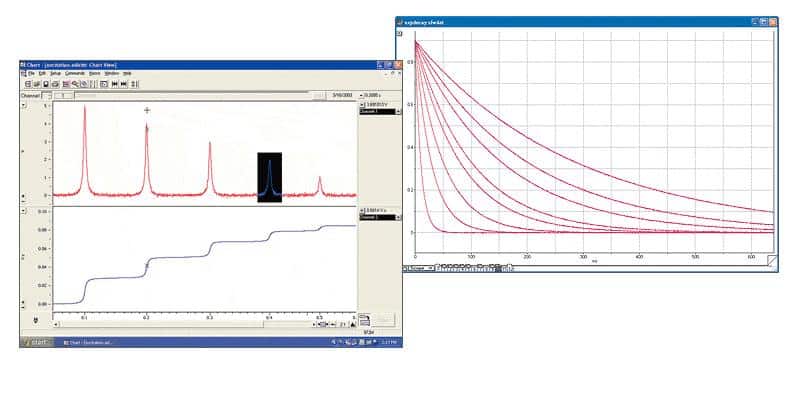
For monitoring the signals from most sensors e-corder systems can be used with Chart software or PowerChrom software. The PowerChrom system is also available which uses the PowerChrom software with its own special purpose-built recording hardware.